Crypto deposits and withdrawals
Stake Payments 2026
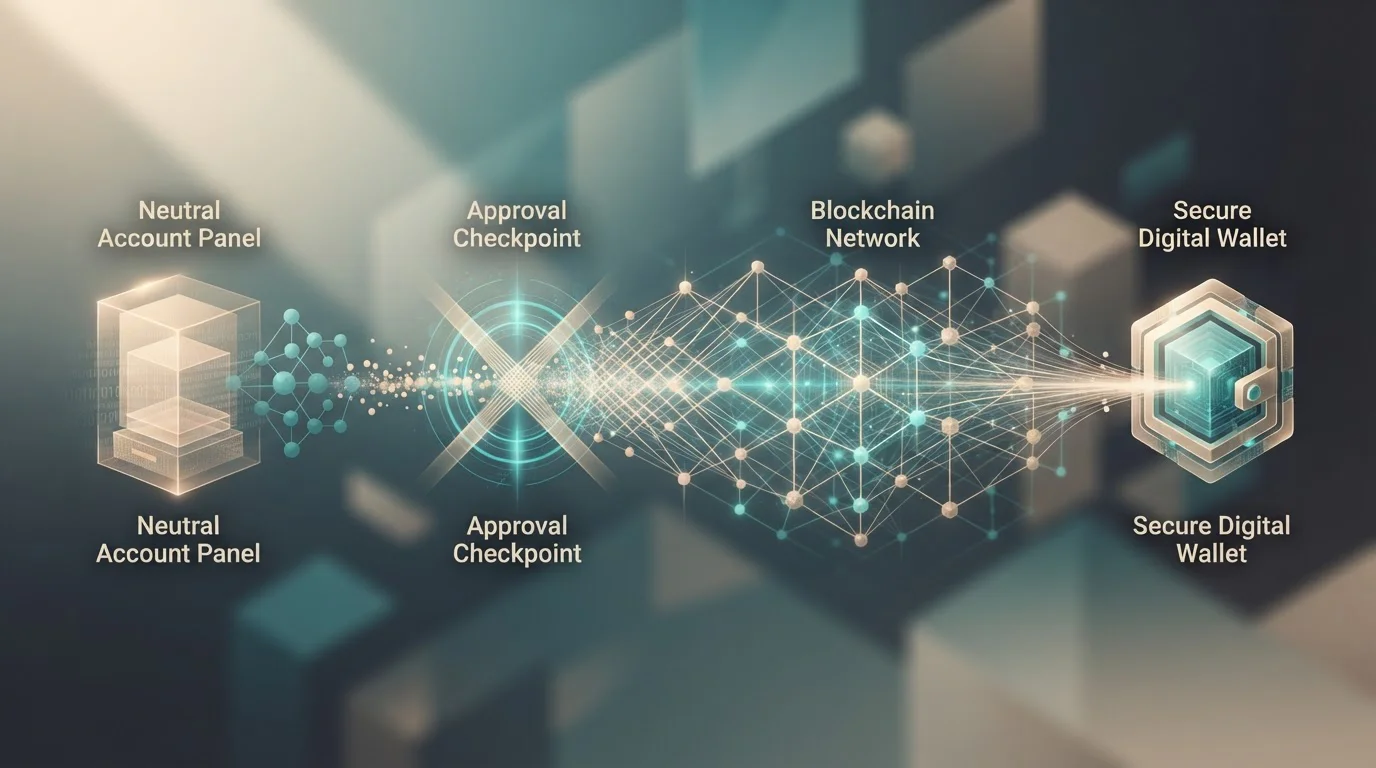
Stake supports more than 20 cryptocurrencies and relies on blockchain transfers rather than conventional casino banking. The main operational risks are choosing the wrong network, treating a variable minimum as fixed, or assuming that approval time and blockchain settlement are the same thing.

Stake payments start with the asset and network
The supported list includes BTC, ETH, LTC, DOGE, SOL, TRX, XRP, BCH, BNB, USDT, USDC and POL, with total support above 20 cryptocurrencies. That breadth is useful only when the sending wallet and Stake payment dialog agree on both the asset and the blockchain route. A ticker alone is not enough for assets that can move across multiple networks.
- Crypto support20+ assets
- Deposit minimumVaries by coin and network
- Platform withdrawal capsNo daily, weekly or monthly crypto caps
- Stake withdrawal feeNone; network fee applies
A dedicated Stake deposit guide covers asset selection and minimums, while the Stake withdrawal guide focuses on approval, timing, fees and account checks.
Known network mappings reduce route ambiguity
Several mappings are explicit in the mapped payment details. ETH uses ERC20, TRX uses TRON, SOL uses Solana, POL uses Polygon and BNB uses BEP20. USDT can use ERC20 or TRC20 among other routes. The presence of more than one USDT route illustrates why the network field deserves the same attention as the wallet address.
ETH
Mapped to ERC20. The wallet and Stake payment dialog should both show the same Ethereum route.
USDT
ERC20 and TRC20 are both mapped routes. Treat “USDT” as the asset name, not the complete transfer instruction.
TRX
Mapped to TRON. Do not substitute a similarly named token route from another wallet menu.
SOL
Mapped to Solana. Match the route before copying the deposit or withdrawal address.
POL
Mapped to Polygon for Stake payments.
BNB
Mapped to BEP20. Check that the receiving side also names the same network.
Network speed can differ between routes. Use the live payment dialog for the route being selected rather than assuming one network will always be faster or cheaper.
Stake payment table
The shared payment rules are shown once, while the final column highlights what actually changes by asset. Deposit and withdrawal minimums remain route-specific, so the live payment dialog is the practical reference.
| Coin | Network | Min Dep | Min WD | Speed | Fee | Route note |
|---|---|---|---|---|---|---|
| ETH | ERC20 | Route-specific; live dialog applies | Live dialog only | Near-instant after approval; typically about 15 min–2 h, with manual review up to 24 h | No Stake withdrawal fee; network fee applies | Single mapped Ethereum route. |
| USDT | ERC20 / TRC20 | Multiple mapped routes; match the same network on both sides. | ||||
| TRX | TRON | Mapped to the TRON network. | ||||
| SOL | Solana | Mapped to Solana. | ||||
| POL | Polygon | Mapped to Polygon. | ||||
| BNB | BEP20 | Mapped to BEP20. | ||||
| BTC, LTC, DOGE, XRP, BCH, USDC | Check dialog | No single network mapping is fixed here; use the route shown for the transaction. |
- Deposit threshold
- The minimum is around a $10 equivalent, but the actual threshold depends on the coin and network.
- Payout timing
- The timing above is typical rather than guaranteed, and blockchain confirmation can continue after Stake has approved and broadcast a withdrawal.
- Fee split
- Stake does not add its own crypto-withdrawal fee; the network fee remains part of the transfer.
Deposit minimums vary with the route
Stake's minimum deposit is around a $10 equivalent, but the practical threshold depends on the coin and network. A single hard-coded amount would therefore be less useful than the current value in the payment dialog. This matters most when crypto prices move or when a network has its own transfer constraints.
- Choose the intended cryptocurrency in Stake's payment flow.
- Read the network label and current minimum shown for that route.
- Select the same network in the external wallet or exchange.
- Compare the destination address character by character or with the wallet's verification tools.
- Send only after the asset, route and address all match.
A deposit address should not be treated as a generic destination for every version of an asset. Stablecoins make the problem obvious because the same USDT balance can be withdrawn from an exchange over different networks. The more route choices a wallet exposes, the more valuable a deliberate network check becomes.
For a more focused walk-through, use the deposit page, which keeps the discussion on route matching, variable minimums and irreversible-transfer checks.
Withdrawals are fast after approval but not guaranteed
Stake crypto withdrawals are near-instant after approval. Typical observed completion times run from about 15 minutes to two hours, while a manual review can stretch the process to as much as 24 hours. Those intervals describe observed handling rather than a promise for every transaction.
- 15 min–2 htypical observed completion range
- Up to 24 hmanual-review cases
- NoneStake-added crypto withdrawal fee
There are no platform daily, weekly or monthly maximum caps on crypto withdrawals. That does not remove account checks: identity or address verification can be requested, particularly around withdrawals, and a payment can remain pending while review takes place. The account guide explains why quick sign-up should not be read as permanent anonymity.
Once a withdrawal reaches the blockchain, settlement becomes a network process. A wallet can therefore show a transaction at different stages from Stake's own account history. Distinguish “approved,” “broadcast,” and “confirmed” rather than treating them as one timestamp.
A network mismatch is the biggest avoidable transfer error
Crypto payment mistakes are difficult to reverse because blockchains do not provide the same chargeback mechanism as a card payment. The dangerous pattern is not usually choosing the wrong casino menu; it is selecting an asset correctly but routing it over a different chain from the one expected by the destination address.
Before sending
- Match the asset ticker.
- Match the network name.
- Verify the address.
- Check the live minimum and fee shown by the sending service.
When something looks wrong
- Do not send a second transaction to “test” an uncertain route.
- Preserve the transaction hash and wallet history.
- Compare the network named by the sender with the network selected in Stake.
- Use account support if a transfer has already been broadcast.
The core rule is mechanical rather than promotional: the same asset can have several technical routes, and only a matching route can be evaluated as the intended transfer.
Fiat enters through crypto purchase rather than classic banking
Stake is crypto-first. Traditional fiat banking is not the standard casino deposit model. A user who starts with fiat can purchase cryptocurrency through partner purchase routes, then continue with a crypto transfer. That adds a separate conversion step before the casino deposit itself.
- Starting with crypto
- Choose the supported asset and network, then transfer from a compatible wallet.
- Starting with fiat
- Purchase crypto through a partner route first; the casino balance is still funded through the crypto payment path.
- Cost comparison
- Separate purchase or conversion costs from blockchain network fees and from the casino's own withdrawal-fee policy.
Crypto price movement can also change the fiat value of the balance independently of gambling results. That is a market-exposure risk, not a casino payment fee, and it can work in either direction.
Stake payments FAQ
Which cryptocurrencies does Stake support?
Stake supports more than 20 cryptocurrencies. The named set includes BTC, ETH, LTC, DOGE, SOL, TRX, XRP, BCH, BNB, USDT, USDC and POL (MATIC).
What is the minimum Stake deposit?
The practical minimum depends on the cryptocurrency and network. The threshold is roughly a $10 equivalent, but the live payment dialog is the better reference because the actual minimum varies by coin and route.
How fast are Stake withdrawals?
Crypto withdrawals are near-instant after approval. Typical observed completion times are around 15 minutes to two hours, while manual review can extend the process to as much as 24 hours. These are typical observations rather than guaranteed transfer times.
Does Stake charge crypto withdrawal fees?
Stake does not add its own crypto-withdrawal fee. The blockchain network fee still applies, and its size depends on the network conditions and route used.
Does Stake have withdrawal caps?
Stake has no platform daily, weekly or monthly maximum caps on crypto withdrawals. Account checks, network handling and any transaction-specific limits shown in the payment flow still need to be considered.
Can I deposit fiat directly at Stake?
Stake is crypto-first rather than a conventional fiat-banking casino. Fiat can be used to purchase crypto through partner purchase routes, but classic casino bank-transfer or card banking is not the core deposit model.
Stake payments reward careful network handling
Stake's payment model is broad but technical: more than 20 cryptocurrencies, multiple networks for some assets, no platform daily/weekly/monthly crypto withdrawal caps, and no Stake-added crypto withdrawal fee. The trade-off is operational responsibility. Treat the live payment dialog as the source for route-specific minimums, match the blockchain network on both sides, and separate account approval time from network settlement before judging whether a transfer is delayed.