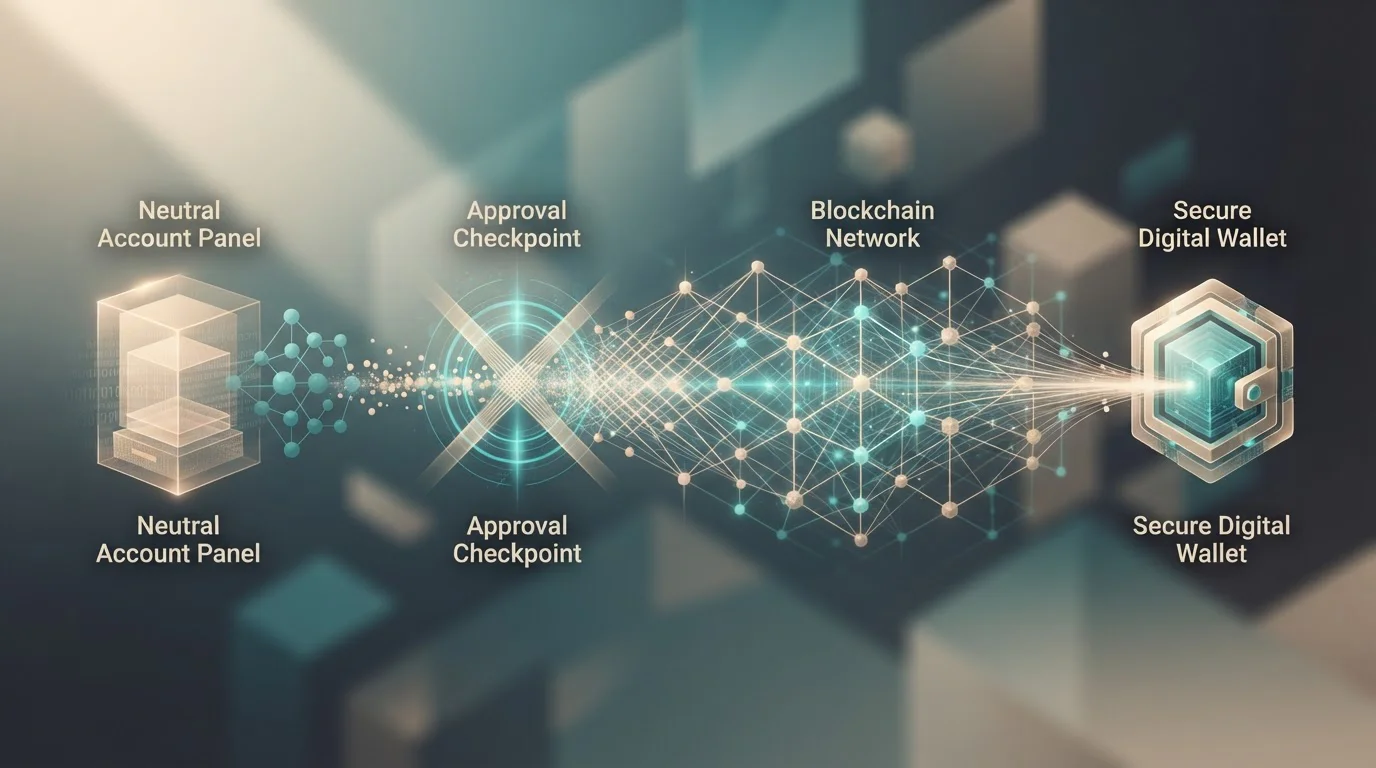
Crypto funding routes
Stake Deposits 2026
Stake supports more than 20 cryptocurrencies, but a deposit is defined by more than the coin ticker. The sending wallet, blockchain network and receiving address need to match the live payment flow, while the practical minimum can change with the selected coin and route.

Stake deposits begin with more than 20 supported assets
Stake lists support for more than 20 cryptocurrencies. The named set includes BTC, ETH, LTC, DOGE, SOL, TRX, XRP, BCH, BNB, USDT, USDC and POL (MATIC). That range gives users several ways to fund an account, but it also creates a practical distinction between choosing an asset and choosing the route used to transfer that asset.
- Crypto support20+ assets
- Named assetsBTC, ETH, LTC, DOGE, SOL, TRX, XRP, BCH, BNB, USDT, USDC, POL
- Deposit thresholdVaries by coin and network
- Fiat starting pointBuy crypto first through partner purchase routes
The broader Stake payments guide puts deposits beside withdrawals, fees and payout timing. For users preparing to cash out, the separate Stake withdrawal guide covers approval, fees, timing and account checks.
The network label is part of the payment address
Several Stake network mappings are explicit. ETH is mapped to ERC20, TRX to TRON, SOL to Solana, POL to Polygon and BNB to BEP20. USDT can use ERC20 or TRC20 among other routes. The multiple USDT options are the clearest example of why a user should never treat the asset ticker alone as sufficient.
ETH uses ERC20
Choose Ethereum on both sides of the transfer. A wallet route with a different network label should not be substituted simply because the asset is ETH.
USDT can use more than one route
ERC20 and TRC20 are both mapped for USDT. The selected route must be identical in Stake and the external wallet.
TRX uses TRON
The TRON route should be matched explicitly before the address is copied and the transaction is sent.
SOL uses Solana
Solana is the mapped route for SOL. The network name and destination address should be checked together.
POL uses Polygon
POL is mapped to Polygon in Stake's payment setup.
BNB uses BEP20
BEP20 is the mapped route for BNB and should match the sending side before broadcast.
Network choice also affects transaction behavior. Confirmation speed and network cost are properties of the selected blockchain route, not something that can be inferred reliably from the asset name by itself. The live payment dialog is therefore the useful checkpoint immediately before sending.
Known Stake deposit routes
The table separates routes that are explicitly mapped from assets where the current dialog should be consulted. It does not fill gaps with assumed networks.
| Asset | Known network | Deposit minimum | Practical check |
|---|---|---|---|
| ETH | ERC20 | Route-specific | Match ERC20 in the wallet and Stake dialog. |
| USDT | ERC20 / TRC20 | Route-specific | Select one route and keep it identical on both sides. |
| TRX | TRON | Route-specific | Confirm the TRON label before sending. |
| SOL | Solana | Route-specific | Use the Solana route shown for the deposit. |
| POL | Polygon | Route-specific | Match Polygon on the sending side. |
| BNB | BEP20 | Route-specific | Match BEP20 before broadcast. |
| BTC, LTC, DOGE, XRP, BCH, USDC | Check live dialog | Route-specific | Use the network and minimum currently shown for the transaction. |
Deposit minimums depend on coin and network
Stake's deposit minimum is not a single fixed platform number. The threshold is around a $10 equivalent, while the actual minimum varies with the selected cryptocurrency and network. That means the amount shown in the current payment dialog is more useful than memorizing one headline figure.
What can be treated as stable
- The minimum depends on the chosen coin and network.
- The live payment dialog is the operational reference for the current route.
- Stake supports a broad set of crypto assets rather than one deposit currency.
What should not be generalized
- A roughly $10 equivalent should not be treated as a universal minimum for every coin.
- A minimum seen on one network should not be copied to another route.
- Crypto price movement can change the fiat value of the same token amount between planning and broadcast.
Suppose a user plans a deposit when the token value is close to a remembered threshold. If the asset moves in price before the transaction is sent, or the route has a different live minimum, that remembered figure may no longer describe the current transfer. Re-checking the payment dialog solves both problems without relying on a stale conversion.
A careful deposit workflow prevents avoidable errors
The mechanics are simple, but the order matters. Most of the preventable risk appears before the transaction is broadcast, when the user still has a chance to compare the coin, network and address.
- Choose the cryptocurrency in Stake's deposit flow.
- Read the network label and current minimum shown for that route.
- Select the same network in the external wallet or exchange.
- Copy the receiving address from the current deposit flow and compare it before confirming.
- Check the amount against the current route-specific minimum.
- Broadcast only after the asset, network and destination all match.
- Asset
- The cryptocurrency being transferred, such as ETH, USDT, SOL or BNB.
- Network
- The blockchain route used to move the asset, such as ERC20, TRC20, Solana, Polygon or BEP20.
- Address
- The destination supplied in the current Stake deposit flow.
- Minimum
- The threshold shown for the selected coin and route rather than a universal site-wide figure.
If the wallet offers a network that does not match the current Stake route, the correct response is to stop and reconcile the mismatch before sending. A faster-looking or cheaper-looking route is not a substitute for compatibility.
Starting with fiat adds a crypto-purchase step
Stake is crypto-first and does not use conventional fiat banking as its standard casino deposit model. A user who starts with fiat can purchase cryptocurrency through partner purchase routes, then continue into the normal crypto deposit flow.
- Separate the crypto purchase from the casino deposit in your records.
- Check the asset and network again after the purchase rather than assuming the purchase route matches the deposit route.
- Distinguish conversion costs from blockchain network fees and from any casino-side fee policy.
The extra step also introduces crypto price exposure before the casino deposit is completed. A change in token price can alter the fiat value of the balance independently of any gambling result. That is market volatility, not a deposit fee.
Stake deposits FAQ
Which cryptocurrencies can I deposit at Stake?
Stake supports more than 20 cryptocurrencies. The named set includes BTC, ETH, LTC, DOGE, SOL, TRX, XRP, BCH, BNB, USDT, USDC and POL (MATIC).
What is the minimum Stake deposit?
The practical minimum depends on the selected cryptocurrency and network. The threshold is around a $10 equivalent, but the live payment dialog is the operational reference for the current route.
Which network should I use for a Stake deposit?
Use the same network shown in Stake's live deposit dialog and in the sending wallet. Known mappings include ETH on ERC20, TRX on TRON, SOL on Solana, POL on Polygon, BNB on BEP20, and USDT on ERC20 or TRC20 among other routes.
Can I deposit fiat directly at Stake?
Stake is crypto-first rather than a conventional fiat-banking casino. Users starting with fiat can purchase crypto through partner purchase routes and then complete a crypto deposit.
Why does the network matter if the coin is correct?
A cryptocurrency can exist on more than one blockchain route. The asset, network and destination address need to be compatible, and blockchain transfers are generally irreversible once sent.
Stake deposits favor precise network matching
Stake offers broad crypto coverage, but the practical deposit decision is route-specific. More than 20 supported assets, multiple networks for some tokens and variable minimums make the live payment dialog the key checkpoint. Match the asset, network, address and current minimum before broadcast, and treat crypto volatility and transaction irreversibility as separate risks from the casino balance itself.